
UlvaLaunch
In the UlvaLaunch project, we are optimizing the cultivation of sea lettuce (Ulva) to reduce the ecological footprint and production costs, and we are identifying levers to develop a local seaweed supply chain in Flanders. Although land-based sea lettuce production has great potential to contribute to the protein transition, cultivation methods still need to be refined. Furthermore, many Flemish companies and consumers currently remain somewhat hesitant about producing and consuming seaweed products.
In collaboration with academic partners and companies, we are combining cultivation experiments with an exploratory study to provide seaweed growers, seaweed product manufacturers, and consumers with strategies for sustainable and profitable cultivation and the development of a Flemish seaweed sector.
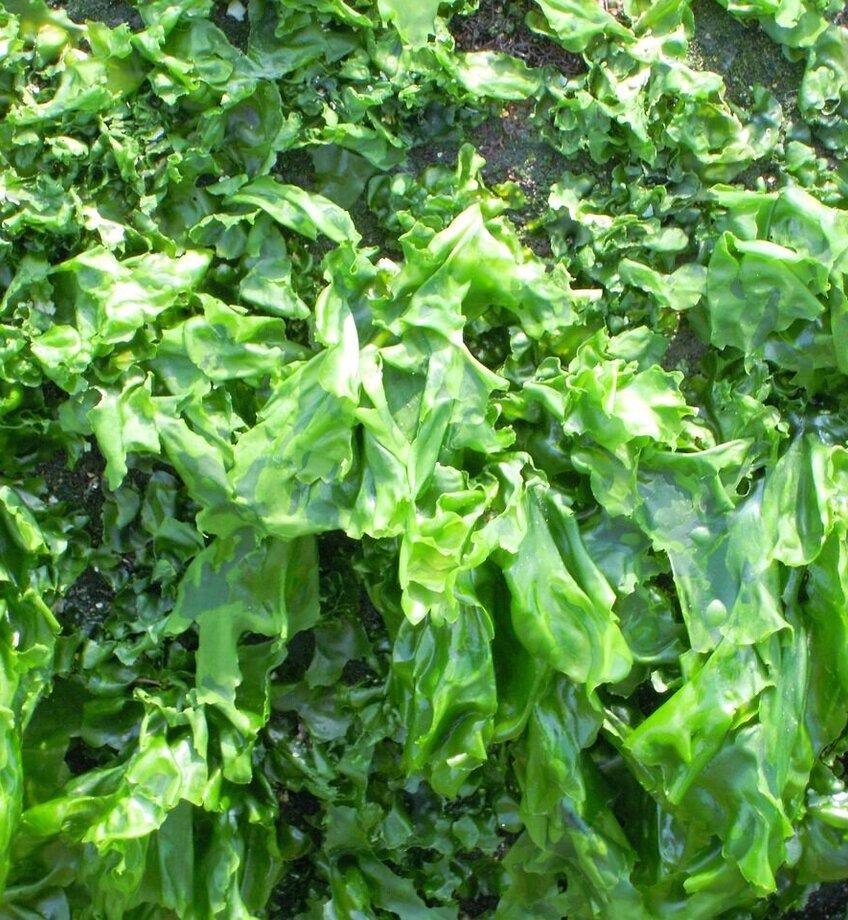
Sustainable Seaweed Farming: Cultivation Optimization and Marketing Leverage
Seaweed cultivation has great potential in Europe and in Flanders, particularly in the protein transition as a healthy and protein-rich component of our diet. Currently, the sector is still small, but the time is ripe to translate existing fundamental knowledge into practical protocols for commercial seaweed farmers. Land-based cultivation of high-value seaweed species such as sea lettuce (Ulva sp.) allows for the year-round production, in a controlled and sustainable manner, of seaweed that is a rich source of protein, omega-3 fatty acids, vitamins, and minerals. To ensure economically viable cultivation, the cultivation systems must be optimized and production costs reduced.
In the UlvaLaunch project, we are identifying Ulva strains that exhibit good growth in seawater with reduced salinity. We are developing a drip-irrigation cultivation system in which these Ulva strains are irrigated with water and testing whether this system positively influences the seaweed’s growth, protein content, and nutrient uptake. In this way, we produce Ulva using less water, sea salt, and nutrients. This allows us to make cultivation techniques more sustainable and optimized, thereby reducing production costs.
In addition, we are investigating what Flemish consumers and producers need in order to consume and produce products containing seaweed. We are identifying which psychosocial aspects related to sustainability and health influence consumers’ decisions to choose—or not choose—food products that contain seaweed. We are also examining the barriers that stakeholders in the seaweed value chain face when incorporating (more) seaweed into their food products. Based on the insights from this exploratory study, we aim to formulate several levers that can help unlock the potential of the Flemish seaweed sector.
#aquaculture, seaweed, sea lettuce, Ulva, marketing