
WaardenVerkenner
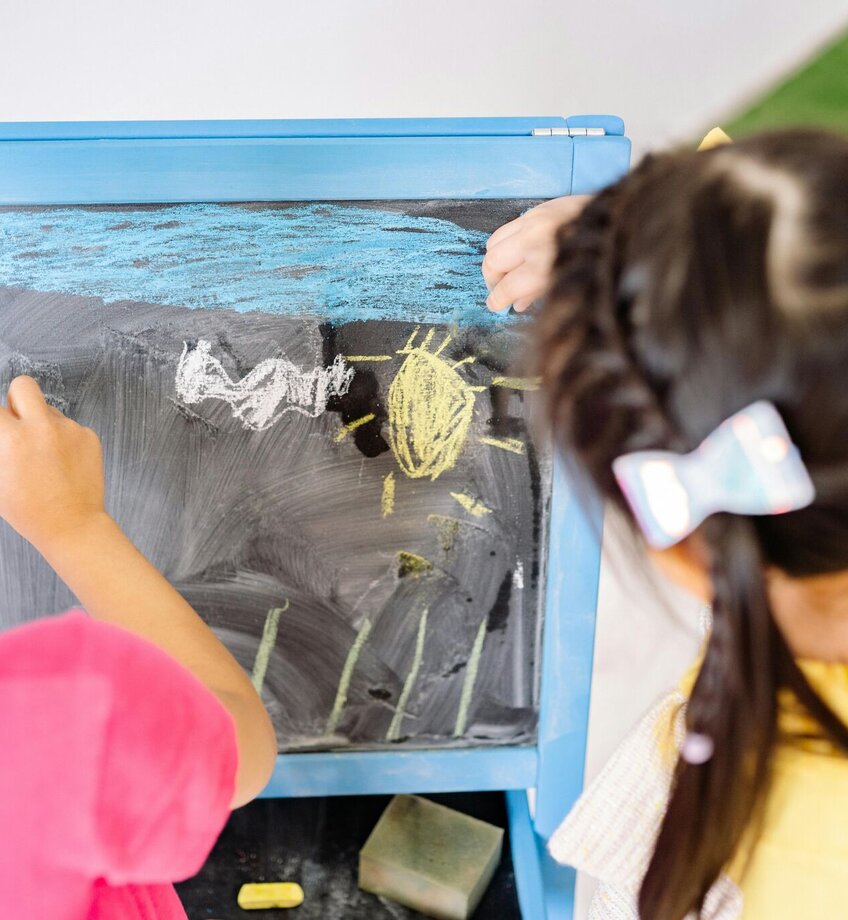
In the research project WaardenVerkenner, we are developing a methodology to support teachers in making sensitive societal topics discussable in primary schools. Teachers often report struggling with conflicting values in their classrooms and express a need for tools to facilitate constructive dialogues on sensitive issues. This accessible methodology combines artistic approaches and philosophical dialogue techniques to encourage pupils to think critically about diverse perspectives within a safe classroom environment.
WaardenVerkenner: Critical Dialogue on Value-Laden Societal Themes
Primary school teachers increasingly report feeling uncomfortable when confronted with conflicting values that cause tension and conflict in the classroom. Diverse perspectives on our shared society challenge teachers in multicultural classrooms. They often lack tools to turn discussions on topics like Black Pete or discriminatory remarks into constructive dialogue, and therefore regularly avoid sensitive issues. As a result, pupils miss out on opportunities for social and moral development.
The research project WaardenVerkenner responds to this need by developing a methodology that promotes value-laden critical thinking among pupils aged 10–12. Through a combination of artistic activities and philosophical dialogue techniques, the methodology supports teachers in guiding value-based discussions on sensitive societal topics. The interaction between art and dialogue creates space for pupils to explore diverse values and perspectives in an accessible way and to develop critical thinking skills.
The methodology is co-developed, tested, and refined with teachers based on their practical experiences and feedback. Both the pedagogical framework and the research methodology are rooted in listening to and acknowledging children’s perspectives in all their diversity.
The project delivers a practical methodology, including teaching materials and guides for educators, and shares its results through workshops, conferences, and publications. It offers valuable support to the education sector in fostering social and ethical development in children, contributing to their growth into critical and empathetic citizens.
#Primary education, value thinking, critical thinking, citizenship education, artistic methods, educational design research
Target
This research project aims to develop a methodology through a cyclical research design for pupils in primary education, specifically those aged 10 to 12, to stimulate value-laden critical thinking on sensitive societal topics through dialogue, using artistic approaches. To ensure broad and accessible implementation, the project also focuses on providing concrete support for teachers and teacher educators. Previous studies indicate that teachers often feel uncertain in such contexts, yet offer few practical tools.
WaardenVerkenner provides teachers and teacher educators with a concrete methodology to (1) create a safe classroom environment in which (2) different perspectives on sensitive topics can be critically explored together. The methodology is designed to help teachers overcome their uncertainty in facilitating critical classroom dialogue on value-laden issues. When teachers can use the learning materials with minimal adaptation, it contributes to more effective integration of philosophical dialogue as a method in schools. Additionally, this research project aims to bridge the gap between the theoretical knowledge offered by teacher educators and the practical skills future teachers need in diverse classroom settings, through concrete learning materials and didactic support. The combination of philosophical dialogue techniques and artistic approaches offers a tangible model for student teachers to practise with. The methodology is both scientifically grounded and practice-oriented, bridging the gap between theory and classroom practice. By introducing the methodology during teacher training, it can be structurally embedded in educational practice. Teacher educators can further refine and adapt the methodology to address emerging societal challenges, ensuring its continued relevance.
Research question & methodology
Main research question: How can value-laden critical thinking on sensitive societal topics be stimulated in pupils (aged 10–12) in primary education?
Methodology: The project follows the principles of Education Design Research, in which didactic materials are developed, evaluated, and refined through successive cycles. This process takes place in close collaboration with a professional learning community (PLC) of teachers and experts, ensuring involvement from the field. The didactic materials are evaluated in primary schools as well as in workshops for (aspiring) teachers. The research contributes to a sustainable strengthening of both educational practice and academic inquiry.
Project Team




Project partners
Academic partners with expertise in controversy/dialogue
- Prof. Griet Galle (KU Leuven)
- Dr. Maarten Van Alstein (Vlaams Vredesinstituut)
- Dr. Ann Pihlgren (Ignite Research Institute)
- Dr. Floor Rombout (HVA)
Work field partners
- Ann Tronque (PDB Ghent)
- Erika Nobels (AGSO)
- Sanne Hermans (Mediawijs)
- Marion Schrijvers (Demoklap)
- Sophie Buysse (Debateville)
- Gideon Hakker (expert in philosophizing with children and art education)
- Paulien Hilbrink (CKN- Centrum Kinderfilosofie Nederland)
- Dr. Grace Lockrobin (SAPERE)
Teacher educators
- Filip Mennes (Odisee Sint-Niklaas)
- Elfi Van Keymeulen (Odisee Aalst)
- Jasmin Callaert (Odisee Aalst)
- Els Jansegers (Odisee Aalst)
- Niels Van Hoof (KdG and AGSO)
- Papatya Dalkiran (HoGent)
- Ness Vanthourenhout (Vives)
- Griet Christiaensen (Artevelde)