
Effective and confident calculation with fractions
We developed a methodology to teach fraction operations in a clear and motivating way to primary school pupils.
This research was initiated in response to declining mathematics results in international assessments such as PISA and TIMSS, which also show a drop in motivation and self-confidence in mathematics among primary school pupils.
By using effective instruction supported by schematic representations, visual aids, a knowledge framework, and easy-to-use games, we aim to improve pupils’ understanding, motivation, and self-confidence when working with fraction operations.
The vision text below outlines how to get started with the ready-to-use materials, which are available free of charge in digital format.
Discover the curriculum here
Find out about continuing education here
Insightfully arrive at calculation rules
Our method moves away from relying on tricks. Each operation is approached in a way that promotes understanding, so that pupils grasp why a solution strategy works. Visual schematisation and precise wording are essential components of this approach.
We do not aim to eliminate calculation rules, but we want pupils to understand where they come from. By learning the procedures together in an insightful way, pupils are guided to derive the rules themselves.
Once the insight is acquired, calculation rules can help speed up the process. However, if a rule is forgotten, pupils should still be able to reach the correct result based on visual representation and a clear understanding of the operation.
From the very first lesson, attention is given to accurate wording and schematic representation of operations using three models: the rectangle model, the strip model, and the circle model. Pupils must be able to represent operations using these three models independently.
Once pupils master the concepts and can solve operations without visual aids, the intention is to phase out the use of these models.
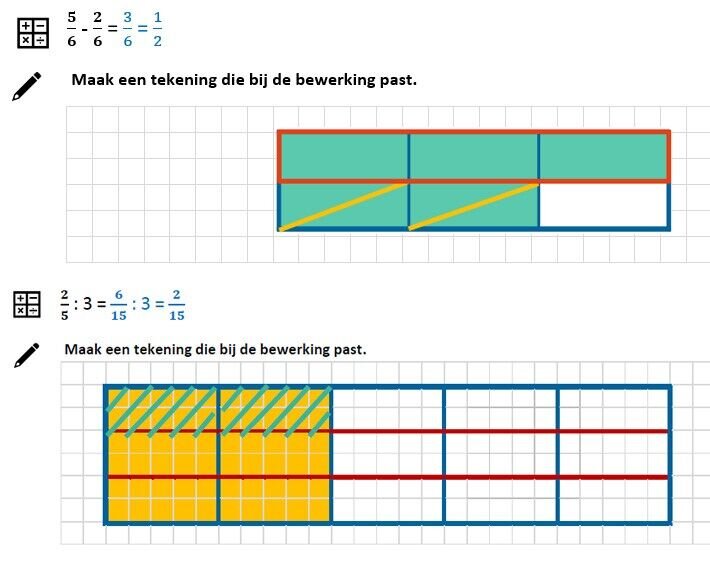
From drawing to sketching
When visually representing mathematical operations, we differentiate between the second and third stages of primary education.
In the second stage, pupils have not yet fully grasped the concept of fractions. It is therefore important to work with precise visual representations.
A fraction divides a whole into equal parts, and this must be clearly visible in the drawing. Pupils should be made aware of the importance of accuracy in their illustrations. All worksheets include grid paper to help pupils draw precisely.
Once pupils understand the concept of fractions and the idea that a fraction divides a whole into equal parts, teachers can transition to sketching the operation. This becomes a tool for quick and efficient calculation, without pupils losing time on detailed drawings.
Knowledge Framework
Our method is built around the concept of the “knowledge framework”—a schematic overview of operations and the strategies used to solve them.
This framework is introduced at the beginning and revisited at the end of each lesson, giving pupils a clear view of the full scope of operations with fractions. We strongly recommend building this framework together with the pupils and referring back to it regularly. Understanding the whole helps pupils grasp each individual part more effectively.
The knowledge framework is also offered separately, allowing it to be used as a wall chart or reference card. You can easily select the components a pupil needs to create a personalised reference booklet focused on operations with fractions.
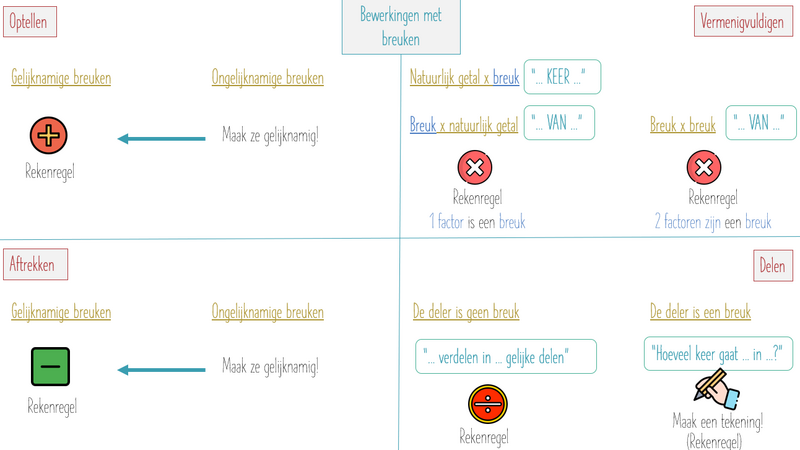
Within the current curricula (2024–2025), the operation of division with fractions is given very limited attention.
Nevertheless, we chose to include all types of operations in the knowledge framework. We want to avoid pupils having only a fragmented understanding of fraction operations, and we believe that seeing the full picture can also foster deeper insight. Even though dividing by a fraction falls well outside the attainment targets and is largely excluded from the 2024–2025 curricula, we still chose to include it—albeit limited to unit fractions and natural numbers as quotients. A calculation rule can be derived for this as well, but our primary focus remains on encouraging pupils to use drawings or sketches to support their understanding.
Discover the curriculum here
Game Materials
Repetition, motivation, and interaction are key educational principles.
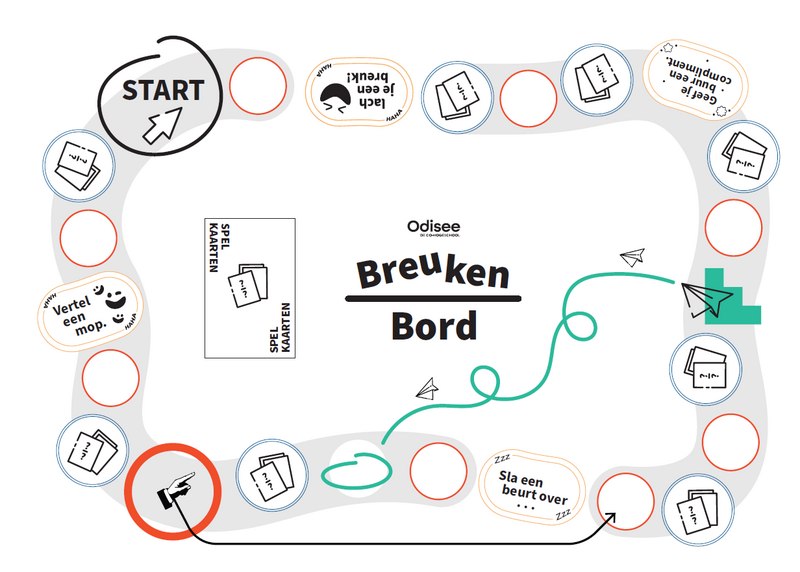
That’s why we choose not only to practise operations through worksheets, but also to offer a wide range of games that reinforce the content. Regular time is set aside to play these games, which strengthens pupils’ understanding of the operations and allows for differentiation based on ability level.
These games can also be used as a morning starter, in learning corners or contract work, when there’s extra time, or as an additional moment of revision.
The playful element engages pupils with the learning content in a different way, boosting motivation. They also learn from interacting with one another.
Games are not the only tool for automatisation—there is also ample time for pupils to work individually on abstract calculation exercises.
Differentiation
As a teacher, you can differentiate primarily by using the knowledge framework. As previously described, you can offer it in full or in parts to pupils who need targeted support. Once a pupil masters a specific part of the content, you remove that operation from their personal reference booklet.
From the start, pupils learn how to represent fraction operations visually. Once a pupil has gained sufficient insight, they no longer need to rely on these visual aids. This allows for easy differentiation—either by letting pupils choose whether to use a drawing or sketch, or by requiring it when necessary.
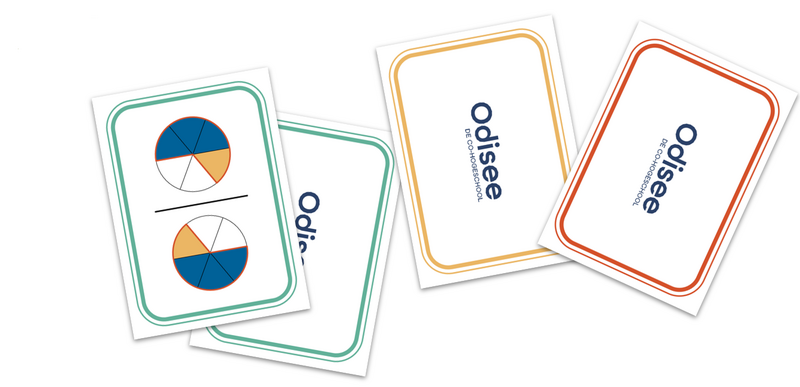
Most games are designed across three levels:
Green (easy), orange (intermediate), and red (challenging).
This colour coding makes it easy to vary the offering and choose whether to form heterogeneous or homogeneous groups. Pupils then play using only the cards that match their level.
You can also use a specific game to help pupils practise a type of operation they still struggle with. This way, all pupils can work on their individual learning needs at the same time. The games support differentiated learning and targeted practice, while keeping pupils engaged through play.
During consolidation lessons, differentiation is possible in terms of the level of instruction. Pupils who are already confident in solving the operations can start working independently right away. For others, it is more beneficial to receive extended instruction, helping them gradually grow in autonomy.
Research results
The material you now have in front of you was developed in phases. In the first phase, a number of lessons were designed and tested by teachers, who provided feedback on the content and usability.
Based on this feedback, we created a first version of the material. Lessons 6, 7, 8, 9, 11, and 12 were developed and then implemented in our experimental classes. At the same time, control classes followed their regular mathematics curriculum. Both the control and experimental groups completed a pre-test before starting the lessons, and a post-test at the end of the trial period.
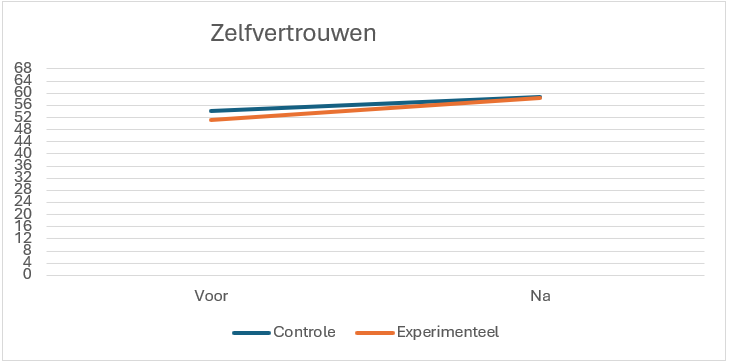
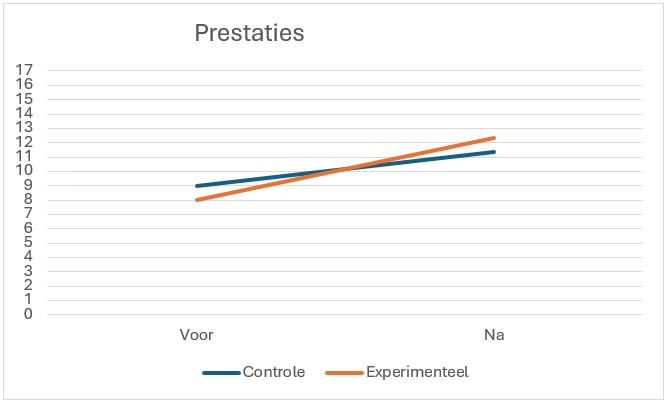
The results of our analysis show that pupils in the control group scored higher on both self-confidence and performance in the pre-test compared to those in the experimental group. This means the control group started with an advantage.
However, by the time of the post-test, pupils in the experimental group scored equally high on self-confidence as those in the control group—indicating that the experimental group experienced greater growth in self-confidence.
Moreover, the analysis shows that the experimental group outperformed the control group in terms of post-test performance, suggesting that they also experienced greater improvement in mathematical achievement.
These results are based solely on lessons 6, 7, 8, 9, 11, and 12. Following teacher feedback, the material was expanded—but without any changes to its content or didactic approach.
The research was conducted exclusively with pupils in the sixth year of primary school, and one key piece of feedback was that the method should be supported at the school level, starting earlier in the learning process. Specifically, it should be introduced when pupils first learn to add and subtract fractions in the second stage of primary education. That’s why the material was expanded to 13 lessons, building on the previously tested lessons. This decision was based on the demonstrated effectiveness of the method in improving both performance and self-confidence among pupils.
Discover the curriculum here
Project partners
Nore Wijns and Joke Torbeyns - KULeuven