
LotaPrey
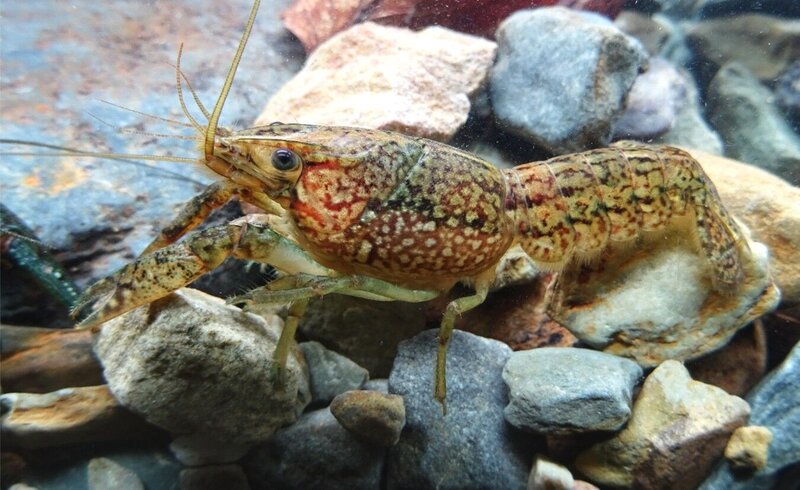
We are developing a new nature-based method for the control of invasive crayfish. Flanders, and by extension all of Europe, is struggling with introductions of exotic crayfish, resulting in significant ecological and economic damage. We are investigating whether we can control the prey preference of burbot (Lota lota), a native predator fish, in such a way that these fish can be used to hunt exotic crayfish in a targeted manner, thus keeping their populations in check.

Prey preference manipulation in burbot: biocontrol of crayfish
Seven species of alien crayfish occur in Flanders. Their impact is multifaceted and leads to negative consequences for biodiversity, ecosystem services and economic activities. All European member states are therefore obliged to monitor, manage and if possible eradicate crayfish on the Union list of invasive exotic species. The efficiency and results of common management measures are usually disappointing and highly context-dependent. Recent evidence suggests that the introduction of predatory fish is a promising measure to control a crayfish population and mitigate their impact. Preliminary research by Odisee and INBO shows that burbot, endangered in Flanders, is an effective predator on non-native crayfish. The project investigates whether we can control the prey preferences of burbot to increase and make predation on crayfish more efficient. If this research yields positive results, it offers numerous application possibilities. On the one hand, a solution will be developed for the management of invasive crayfish populations - a problem all over Europe. On the other hand, we can optimize this method and use it to control other invasive species.
#predator, crayfish, invasive exotics, nature-based solutions
Meet the researchers




Partner
Institute for Nature and Forest Research (INBO), Dr. Frédérique Steen