
Social work practices in Brussels’ faith-based initiatives
This project maps out the widest possible variety of faith- and belief-based organisations (FBOs) in Brussels and conducts practice-based research on how collaboration with social work organisations can be improved. In today’s post-secular society, FBOs are increasingly taking on roles in providing support and assistance to vulnerable groups who fall through the cracks of the welfare system. We are conducting extensive field research to map the diversity of FBOs in Brussels and are setting up an action research project in collaboration with practitioners, FBOs, students, lecturers, and researchers. We are also developing a training package for social workers and educational programmes.
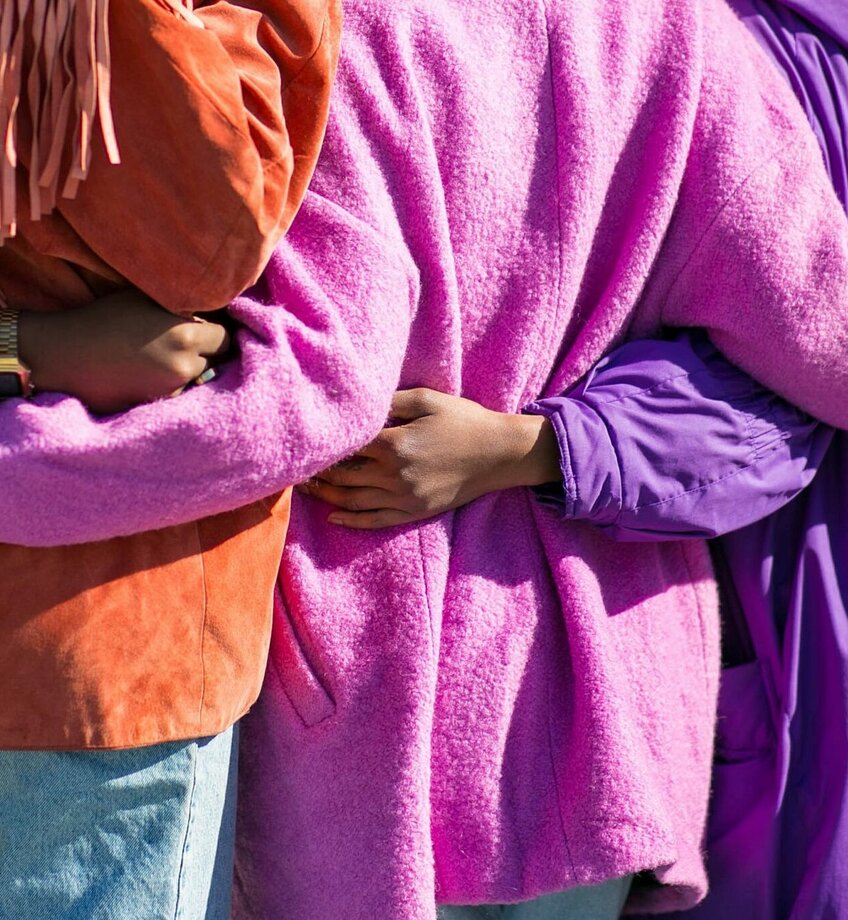
Social work practices for people with precarious residence statuses in Brussels: an exploration of faith- and belief-inspired solidarity initiatives
This project examines the relationships between faith- and belief-based organisations (FBOs) and welfare state institutions (WSIs). Today, the national welfare state does not (yet) offer answers to a number of new challenges in our rapidly changing world. FBOs respond to some of these challenges and are becoming increasingly important in the organisation of social support and solidarity. Especially in cities with high diversity, we see that people’s religious beliefs are once again taking up space in public life.
In today’s societal context, this trend is often viewed with suspicion. Yet, FBOs have many strengths that enable them to address the challenges of our time. There is a need for more nuance and substantiation in the debate on what solidarity should look like. That is why this project explores what FBOs in Brussels do in their everyday practices and how they relate to WSIs and the welfare state. The focus is specifically on people with precarious residence statuses.
The project aims to:
- Design a template for a (dynamic and interactive) social map of FBOs in Brussels;
- Develop tailored community service learning modules (for social work students) and training sessions (for the Brussels social work field), based on in-depth qualitative field research with Brussels-based FBOs and WSIs; and
- Improve collaboration between secular and religious forms of solidarity.
Central to the project is the idea that we must invest in a form of social work that can build bridges and collaborate with FBOs based on complementarity.
Publications
Faith-based food aid
Even today, faith- and belief-inspired initiatives remain important actors in the urban food aid landscape. With their low-threshold approach and generalist support, they often reach target groups that remain under the radar of local authorities or social work organisations.
However, collaboration between these initiatives and local policymakers is not always smooth. Local authorities are not always aware of their existence, and some faith- and belief-inspired food aid initiatives feel a lack of recognition for their work or fear being instrumentalised.
Elisabet Van Wymeersch, Mieke Schrooten, and Marjan Moris wrote a contribution on this topic in the publication Building a Broad Social Policy: Food Aid Under Protest. In the article, they explore faith-based food aid in Belgium and offer practical guidance for local policymakers.
Religious diversity in Brussels
Brussels is a super-diverse city, including in terms of religion and worldview. Churches, mosques, places of worship and temples play both a philosophical and social role. How do you build bridges between these organisations and local government? The municipality of Anderlecht got to work on it.
Sylvie Van Dam and Mieke Schrooten in Sociaal.net, May 24, 2023
Brussels as the exception in the e-course God in the Welfare State
This course explores faith- and belief-inspired solidarity initiatives and was developed as part of the FWO SBO project Soligion.
As part of the PWO project, we contributed the chapter Brussels as the exception. In this video, we explain the similarities with Flanders (where the Soligion research took place), but also highlight how Brussels can be quite different. The metropolitan context, complex governance structures, multilingualism, degree of superdiversity, administrative culture, and attitudes towards religion — all these factors make Brussels a unique case. In the video, Johan Vrints shares insights from his experience with interfaith work at Orbit vzw, explaining why this is the case. This chapter has been added to the e-course.
Schrooten, M., Welschen, S. (2022). Sociaal schaduwwerk: Informele sociaalwerkpraktijken in België en Nederland. Journal of Social Intervention, 31 (1), 4-23. (open access)
Van Dam, S., Maes, S., Schrooten, M., Broeckaert, B., Raeymaeckers, P. with Van Dam, S. (joint first author) (2022). De rol van religieus of levensbeschouwelijk geïnspireerde solidariteitsinitiatieven in armoedebestrijding. In: Armoede en Sociale uitsluiting - Jaarboek 2022, Chapt. 9, (329-344). Leuven: Acco. ISBN: 978-94-6379-924-9. (open access)
Schuermans, G., Attalhaoui, M. (contr.), Schrooten, M. (contr.) (2023). Religie veroorzaakt nog steeds ongemak bij sociale professionals. Sociaal.Net. (open access)
Schrooten, M., Ver Elst, D., Vrints, J. (2022). Niet alleen religieuze symbolen, maar ook religie zelf verdient een plaats. MO.be. (open access)
Maes, S., Van Dam, S., Schrooten, M., Broeckaert, B., Raeymaeckers, P. (2024). Faith-based organizations. In: R.A. List, H.K. Anheier, S. Toepler (Eds.), International Encyclopedia of Civil Society, (1-8). Springer: Cham. ISBN: 978- 3-319-99675-2.
Van Dam, S., Schrooten, M. (2024). Religieus en levensbeschouwelijk geïnspireerde solidariteitsinitiatieven als sociaal werkactoren. Report No. CeSO/SW/, 2024-6, KU Leuven Associatiewerkgroep Sociaalwerkonderzoek.
De Malsche, A., Schrooten, M., Van Dam, S. (2024). Studenten verkennen religieuze solidariteit. Service-learning blogpost 9 jan 2024.
Social Work Research Center newsletter: project in the spotlight
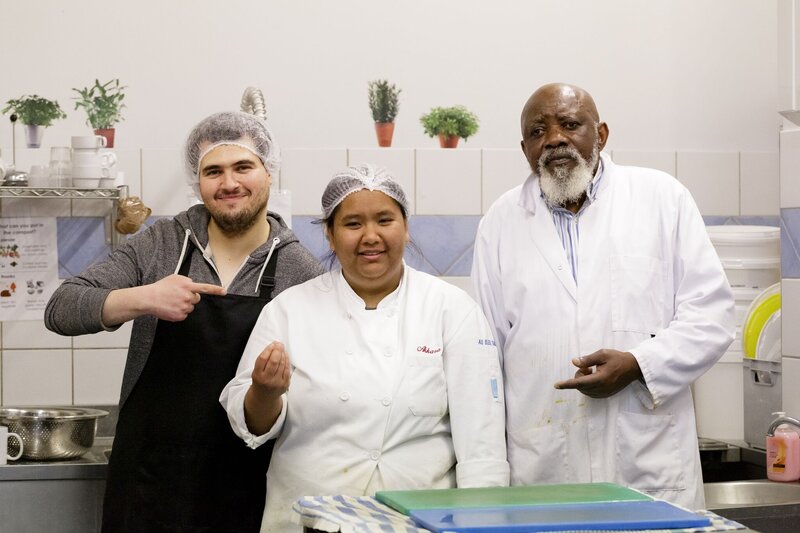
The research project launched in 2021 on social work practices in Brussels’ faith-inspired initiatives maps out the widest possible variety of religious and belief-based organisations in Brussels and examines how collaboration with ‘formal’ social work organisations unfolds. Last year, the researchers, together with field partner Orbit, seized the opportunity presented by the partial overlap of Ramadan and Lent to set up a student-led initiative. Several social work students engaged with two faith-inspired solidarity initiatives — a mosque organising solidarity activities during Ramadan and an Anglican church running a community kitchen. The students participated in the activities and listened to the lived experiences of members of both communities. As a final product, they created an exhibition featuring photos and testimonials from people involved in the two initiatives. For this, they collaborated with a photography collective called Paté Patiné, known for its expertise in street photography and social themes.
Meet the researchers
Our partners


Co-Promoter: Peter Raeymaeckers, Master of Social Work program (University of Antwerp)
Partners: ORBIT vzw / Kenniscentrum Welzijn, Wonen, Zorg vzw / Foyer vzw
Want to know more about this project?
As part of this project, we also collaborated with the photography collective Paté Patiné. They captured atmospheric images and portraits in the community kitchen of Holy Trinity Church and at the Islamic Cultural Centre Al Amal. Go to the Paté Patiné project page religion and solidarity