
WetenschapsNeus

How can we strengthen young people's resilience against scientific mis- and disinformation? In this developmental research project, we focus on media literacy within a scientific context, both in secondary education and in museums.
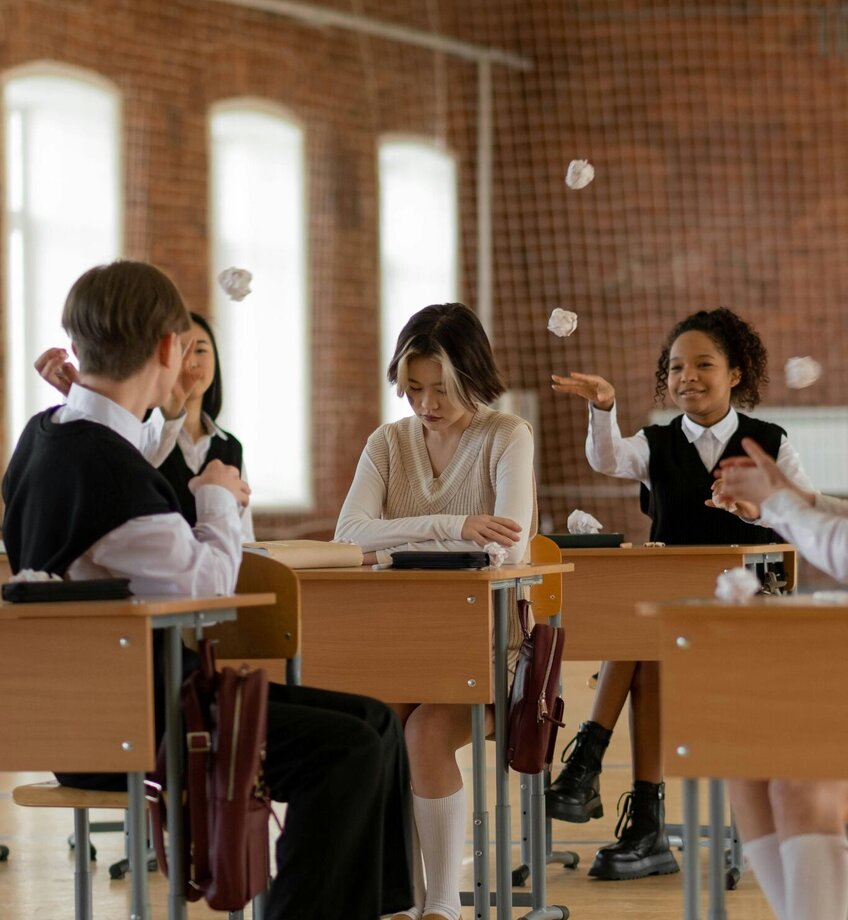
young people in classroom
Looptijd
/
Financiering
PWO

Foster resilience in the face of mis/disinformation around science

How can we empower young people to resist scientific mis- and disinformation?
Teachers and educators are increasingly asking this question. Flemish education goals also expect schools to address this challenge at the intersection of media literacy and STEM education. Research shows that Flemish students score relatively low in recognising fake news, and both teachers and museum educators often feel ill-equipped to tackle the issue. Theoretical research highlights:

  1. The importance of specific attention to media literacy in a scientific context;
  2. The need for students to reflect on concepts such as reliability;
  3. The value of reflecting on their own information-gathering processes;
  4. The necessity of a safe environment that allows students to question fundamental ideas about science.

This development-focused research project translates these theoretical insights into the Flemish context of formal and informal science education, in collaboration with a professional learning community. The team is developing a methodology that emphasises dialogue in a safe space and reflective exercises aimed at understanding scientific knowledge. The project investigates whether and how this approach strengthens young people's trust in science and their resilience against mis- and disinformation. It also examines whether the approach increases the confidence of teachers and educators to address this issue. The methodology will be disseminated through training sessions, an e-book and publications for both the research community and practitioners (education, science communication, science museums). Implementation will take place in schools, teacher training programmes, and museums.


Problem definition and goal of the project

Discussions about vaccines, global warming, or the theory of evolution spark controversy in both the media and science education. In the so-called ‘post-truth’ era, it is increasingly difficult for students to distinguish truth from falsehood. We aim to investigate how to strengthen young people's resilience against the ‘infodemic’ of scientific misinformation and disinformation by fostering their critical thinking skills.

Challenge in students

Worldwide, and also in Flanders, young people struggle with assessing and recognising scientific mis- and disinformation. On online (social) media, gatekeepers who select information are no longer present. The challenge is to sharpen young people's internal gatekeeper and thereby activate their ‘mental immune system’.

Educational Context

Recognising scientific mis- and disinformation is an educational priority in the renewed curriculum goals for secondary education: key competencies in STEM/science and media literacy highlight its importance. On the one hand, young people should learn to reason scientifically (and thus also learn to recognise ‘real’ science). On the other hand, the approach aligns with media literacy: learning to access, understand, and critically evaluate media.

Need among teachers and educators

Both (aspiring) teachers and educators (in science museums) feel underprepared and uncertain about how to address mis- and disinformation with young people. Interviews with Flemish science teachers confirm this. What stands out is that many teachers view science as self-evident, believing that anyone who thinks rationally will automatically accept scientific insights. This preconceived notion comes under pressure when students question scientific consensus. Perhaps for this reason, pedagogical support services and our research group ExploRatio frequently receive requests for training on how to deal with scientific fake news in the classroom. What emerges from conversations with science museums is that the challenges faced by teachers are often passed on to museum educators. In this sense, educators struggle with the tensions that teachers seek to resolve.

Approach

Scientific knowledge alone is often insufficient to engage a sceptic in science. When students end up in so-called mental echo chambers, they hear only their own prejudices about the unreliability of science echoed at school. That’s why it is important not only to focus on what to think, but also on how to think — in other words, on critical thinking. The following points are key:

  • Critical thinking about mis- and disinformation is a domain-specific activity, meaning this skill must be taught within a specific context. Young people who are sufficiently critical of social media may still struggle with scientific literacy. It is therefore important to help students reflect on mis- and disinformation through scientific case studies.
  • Teaching students only to question things can lead to naïve relativism. There is a need for insight into and reflection on knowledge itself, including the concepts we use to think about information (such as reliability or truth).
  • Cognitive psychological research shows that our reasoning styles influence how we assess information. For example, we tend to trust information that contains fewer contradictions or that we encounter frequently. Critical thinking about mis- and disinformation therefore also requires self-reflection — reflection on the lens through which we process information. Recognising that revising one’s opinion can be a good thing is essential.
  • Those who have little trust in science as a system for acquiring knowledge are more susceptible to scientific fake news. For this reason, strengthening young people’s resilience against mis- and disinformation also requires attention to building trust in science.

Meet the researchers

Our partners

  • Gents Universiteitsmuseum
  • Universiteitsmuseum Utrecht
  • Koninklijk Atheneum Berchem
  • Odisee Agro-en Biotechnologie
  • Lerarenopleiding Arteveldehogeschool
  • Academische lerarenopleiding UAntwerpen
  • Department of Education, University of York
  • UGent
  • Arteveldehogeschool
  • Pedagogische begeleiding stad Gent
  • Centrum Nascholing Onderwijs (CNO) Antwerpen
  • Mediawijs-Imec
  • Ecsite science communication

Want to know more about this project?