
Citizenship Reflex
How do you build an open dialogue culture in which sensitive societal topics such as sexual identity or (de)colonization can be discussed constructively? As a teacher, do you respond to statements that radically contradict your own value framework? And is everything really open for discussion with your students?
Clashing opinions on sensitive societal issues are appearing more and more frequently in society and in the classroom. Research shows that a constructive dialogue about social issues increases students’ sense of belonging. Important cognitive and social skills are also practiced, such as suspending judgment or learning to deal with other perspectives in a tolerant way. These skills are important when students later have to find their way in our super-diverse society.
However, despite these advantages, in practice we notice that dialogue about sensitive topics is often avoided because teachers lack practical tools and are insufficiently trained.
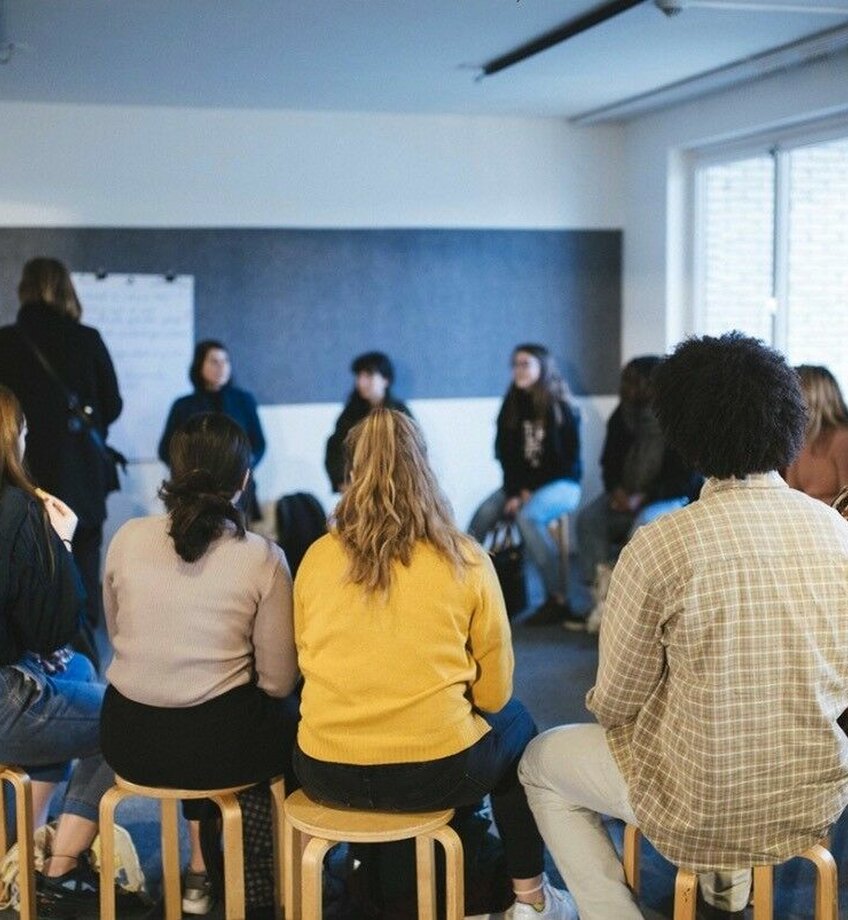
BurgerschapsReflex promotes an open dialogue culture that is both safe and critical.
A survey conducted by the research group ExploRatio of Odisee shows that topics related to identity or justice create the most tension in the classroom and are most often avoided by teachers.
To support teachers in engaging in dialogue with students nonetheless, we developed accessible and structured dialogue exercises that encourage students to reflect on themes such as (de)colonization, war, racism, gender, or sexuality. The dialogue materials were tested by around 100 secondary school teachers in Flanders and Brussels.
The core of the BurgerschapsReflex dialogue model is based on elements of the Socratic dialogue and insights from nonviolent communication. The methodology consists of dialogue and reflection exercises that can be carried out both individually and in groups. The emphasis is not on finding ready-made answers or reaching consensus, but on critically exploring a statement, a case, or a question together.
In the footsteps of Socrates
During a Burgerschaps dialogue, the teacher takes on the role of discussion leader. A discussion leader stimulates students’ thinking primarily by suspending their own judgment and listening without prejudice.
The core of this reflective stance is also called the Socratic attitude. The philosopher Socrates consistently refrained from putting forward his own opinion, which allowed him to listen with curiosity and a sense of wonder, and to ask questions about what and how his interlocutors truly thought. Does everyone think this line of reasoning is correct? If so, why? Does anyone have a (counter)example? Is this the case in every similar situation? What makes this issue important? Does it apply to everyone? Does anyone see it differently?
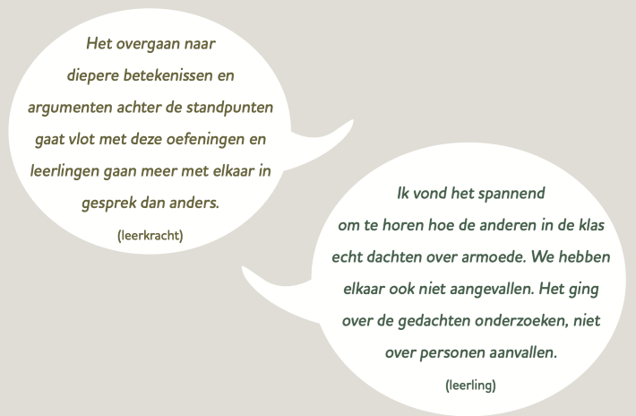
Like Socrates, in dialogue we emphasize not clear-cut answers, but questions that probe underlying arguments or ways of thinking. Students discover and learn to articulate what they themselves find important and learn to listen to how others relate to it. They explore not only what they think, but also how their thoughts are formed and why they think the way they do.
And here lies an important key to connection. When we dig deeper together into the values underlying our judgments, we often arrive at the same things—such as respect, friendship, trust, the importance of family, and so on.
In this way, our shared human core behind the visible differences becomes apparent again, creating space for respectful dialogue, even when we view the issue differently.
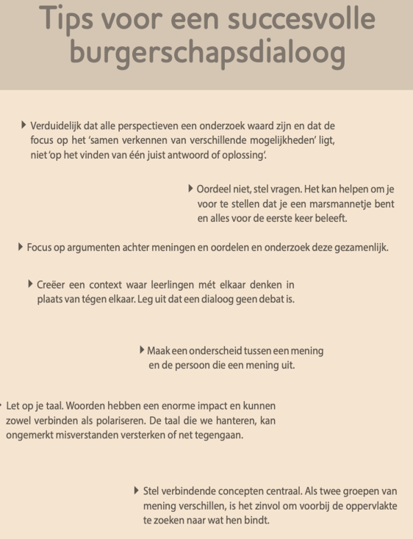
A safe dialogue context
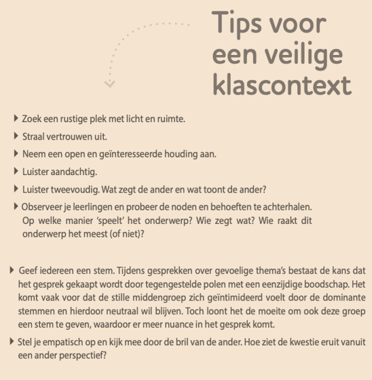
Preventive and gradual
If we can regularly practice, step by step, how to respectfully disagree and learn how to critically examine our judgments together, we build a strong toolbox to rely on when a sensitive topic stirs emotions in the classroom.
That is why we recommend that schools gradually work towards an open dialogue culture “in times of peace” — one that is both safe and critical at the same time.
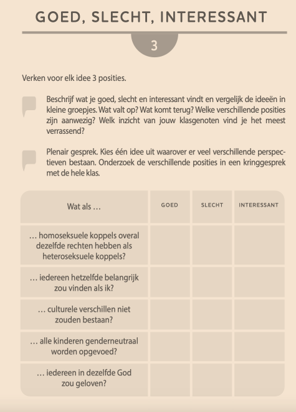
Sample exercise: ‘good, bad, interesting’
Seventy-four teachers who worked with the BurgerschapsReflex dialogue exercises report that students were effectively encouraged to adopt multiple perspectives. The exercise “good, bad, interesting” is an example from BurgerschapsReflex in which students learn to take on three different positions in relation to a statement. In addition to a moral position (good and bad), students are also encouraged to adopt a reflective position (interesting). By promoting perspectives that are not solely morally framed, students learn to look at an issue beyond their own viewpoint.
Learn more
You can download the BurgerschapsReflex guide, classroom materials, and an article with the research results here.
And through this link, you will also find additional information such as scientific articles, blog posts, and videos about conducting critical dialogues with young people on sensitive societal issues. The link also includes other educational tools from ExploRatio to help engage students in critical dialogue about sensitive themes related to citizenship, sustainability, science, and the tension between science and belief.
Meet the researchers
Also previously collaborated on the project:
- Jelle De Schrijver
- Evelyn Morreel



Our partners
We are rolling out this approach in collaboration with various field partners. These partners are involved as experts, as bridges to schools, as members of the professional learning community, or as co-authors of research or practice-oriented publications.